


Epoxy floor coating is a transformative solution for those looking to enhance the appearance and durability of their plywood subfloors. This comprehensive guide will walk you through the benefits, preparation, application, and maintenance of epoxy coatings, ensuring stunning results for your flooring project.
Why Epoxy Is a Game-Changer for Plywood Subfloors
Epoxy floor coating offers numerous advantages that make it an ideal choice for plywood subfloors. Its unique properties provide enhanced strength, a seamless finish, and a modern aesthetic.
Enhanced Strength and Surface Stability
Epoxy coatings significantly increase the strength and stability of plywood subfloors. By forming a hard, durable surface, epoxy can withstand heavy foot traffic and resist wear and tear. Epoxy coatings can increase floor strength by up to 200%, making them a robust choice for both residential and commercial settings.
- Increases floor strength by up to 200%
- Provides a durable surface resistant to wear and tear
- Ideal for high-traffic areas
Seamless and Moisture-Resistant Finish
One of the standout features of epoxy is its ability to create a seamless, moisture-resistant finish. This is particularly beneficial for plywood, which can be susceptible to water damage. The seamless nature of epoxy prevents water from seeping through, protecting the subfloor and extending its lifespan.
- Creates a seamless surface that prevents water seepage
- Protects plywood from moisture damage
- Extends the lifespan of the flooring
Modern Aesthetic With High-End Visual Appeal
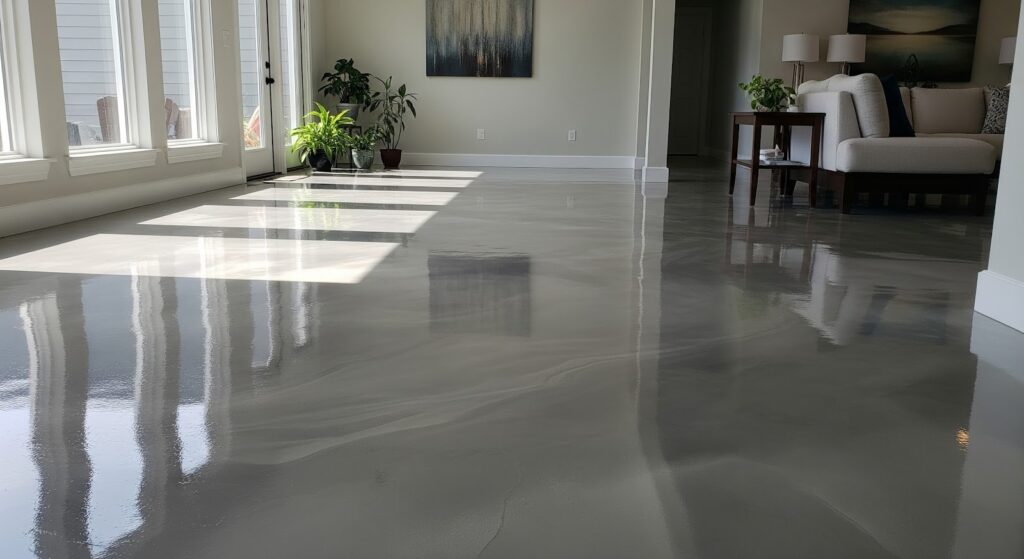
Epoxy floor coatings offer a sleek, modern look that can elevate the aesthetic of any space. With a variety of design options available, including solid colors, metallic finishes, and flake systems, epoxy can be customized to suit any interior style, providing a high-end visual appeal.
- Offers a sleek, modern look
- Customizable with various design options
- Enhances the visual appeal of any space
Preparing a Plywood Surface for Epoxy Application
Proper preparation of the plywood surface is crucial for achieving the best results with epoxy floor coating. This involves inspecting, securing, and cleaning the subfloor to ensure optimal adhesion.
Inspecting for Movement, Damage, or Moisture
Before applying epoxy, it’s essential to inspect the plywood for any signs of movement, damage, or moisture. Addressing these issues beforehand will prevent future problems and ensure a smooth application process.
- Check for signs of movement or instability
- Repair any damage to the plywood
- Ensure the surface is dry and free from moisture
Securing Panels and Eliminating Flex
To prevent movement and ensure a stable surface, it’s important to secure the plywood panels and eliminate any flex. This can be achieved by reinforcing the subfloor with additional fasteners or supports.
- Reinforce subfloor with additional fasteners
- Eliminate any flex in the plywood
- Ensure a stable surface for epoxy application
Sanding and Cleaning the Surface Properly
Sanding and cleaning the plywood surface is a critical step in the preparation process. This ensures that the epoxy adheres properly and results in a smooth, even finish.
- Sand the surface to remove any imperfections
- Clean thoroughly to remove dust and debris
- Ensure a smooth, even surface for epoxy application
Priming and Sealing the Plywood
Priming and sealing the plywood is an essential step to ensure a strong bond between the epoxy and the subfloor. This process helps prevent issues such as air bubbles and wood off-gassing.
Importance of Penetrating Primers for Wood
Penetrating primers are crucial for wood surfaces, as they help seal the pores and create a strong foundation for the epoxy. This ensures better adhesion and a more durable finish.
- Seals the pores of the wood
- Creates a strong foundation for epoxy
- Ensures better adhesion and durability
Achieving a Strong Mechanical Bond
A strong mechanical bond between the epoxy and the plywood is essential for a long-lasting finish. This can be achieved by using the right primer and ensuring proper application techniques.
- Use the right primer for wood surfaces
- Ensure proper application techniques
- Achieve a strong mechanical bond for durability
Preventing Air Bubbles and Wood Off-Gassing
Air bubbles and wood off-gassing can compromise the quality of the epoxy finish. Proper priming and sealing help prevent these issues, resulting in a smooth, flawless surface.
- Prevents air bubbles in the epoxy
- Reduces wood off-gassing
- Ensures a smooth, flawless finish
Design Options for Epoxy Wood Subfloor Finishes
Epoxy floor coatings offer a range of design options to suit any style or preference. From solid colors to metallic finishes, the possibilities are endless.
Solid Color Systems for Clean Modern Interiors
Solid color epoxy systems provide a clean, modern look that is perfect for contemporary interiors. These systems offer a sleek, uniform appearance that enhances the overall aesthetic of the space.
- Provides a clean, modern look
- Offers a sleek, uniform appearance
- Enhances the aesthetic of contemporary interiors
Metallic Epoxy for High-End Visual Impact
Metallic epoxy finishes create a stunning, high-end visual impact that is sure to impress. These finishes offer a unique, reflective surface that adds depth and dimension to any space.
- Creates a stunning, high-end visual impact
- Offers a unique, reflective surface
- Adds depth and dimension to any space
Flake Systems for Traction and Durability
Flake systems are an excellent choice for those seeking added traction and durability. These systems incorporate colored flakes into the epoxy, providing a textured surface that is both functional and visually appealing.
- Provides added traction and durability
- Incorporates colored flakes for a textured surface
- Offers a functional and visually appealing finish
Avoiding Common Issues When Coating Plywood
To ensure a successful epoxy application, it’s important to avoid common issues such as substrate movement, moisture, and adhesion problems.
Preventing Substrate Movement and Cracks
Substrate movement can lead to cracks in the epoxy finish. To prevent this, ensure the plywood is properly secured and reinforced before application.
- Secure and reinforce plywood to prevent movement
- Avoid cracks in the epoxy finish
- Ensure a stable substrate for application
Handling Moisture and Environmental Conditions
Moisture and environmental conditions can affect the quality of the epoxy finish. It’s important to control these factors during the application process to ensure optimal results.
- Control moisture levels during application
- Consider environmental conditions for best results
- Ensure a high-quality epoxy finish
Ensuring Proper Adhesion With Correct Prep
Proper preparation is key to ensuring good adhesion between the epoxy and the plywood. This includes cleaning, sanding, and priming the surface before application.
- Clean, sand, and prime the surface for adhesion
- Ensure good adhesion between epoxy and plywood
- Achieve a long-lasting, durable finish
Maintenance & Long-Term Care Tips
Proper maintenance is essential to keep epoxy-coated floors looking their best. This includes regular cleaning, protection against scratches, and timely recoating.
Cleaning Methods for Epoxy-Coated Floors
Regular cleaning is important to maintain the appearance and longevity of epoxy-coated floors. Use gentle cleaning methods to avoid damaging the surface.
- Use gentle cleaning methods for maintenance
- Maintain the appearance and longevity of the floor
- Avoid damaging the epoxy surface with harsh cleaners
Protecting Against Scratches and Wear
To protect epoxy floors from scratches and wear, use protective pads under furniture and avoid dragging heavy objects across the surface.
- Use protective pads under furniture
- Avoid dragging heavy objects across the floor
- Protect against scratches and wear for longevity
When to Recoat for Fresh Appearance
Recoating epoxy floors can help maintain their fresh appearance and extend their lifespan. Consider recoating every few years, depending on the level of wear and tear.
- Recoat every few years for a fresh appearance
- Extend the lifespan of epoxy-coated floors
- Maintain a like-new look with regular recoating
Why Installers and Designers Choose Duraamen Systems
Duraamen Systems is a trusted choice for installers and designers seeking high-quality epoxy coatings for wood and flexible substrates.
Engineered Coatings for Wood and Flexible Substrates
Duraamen offers engineered coatings specifically designed for wood and flexible substrates, ensuring optimal performance and durability.
- Engineered coatings for wood and flexible substrates
- Ensures optimal performance and durability
- Trusted choice for high-quality epoxy solutions
Proven Durability in Residential and Light-Commercial Settings
Duraamen’s epoxy coatings have proven durability in both residential and light-commercial settings, making them a reliable choice for a variety of applications.
- Proven durability in residential settings
- Reliable choice for light-commercial applications
- Ensures long-lasting performance and satisfaction
Technical Support and Training Resources for Installers
Duraamen provides technical support and training resources for installers, ensuring successful application and customer satisfaction.
- Offers technical support for installers
- Provides training resources for successful application
- Ensures customer satisfaction with quality support
Final Thoughts
Epoxy floor coating is a versatile and durable solution for transforming plywood subfloors. With proper preparation, application, and maintenance, epoxy can provide stunning results that enhance the beauty and functionality of any space. Whether you’re a homeowner or a professional installer, understanding the benefits and best practices of epoxy coatings will ensure a successful flooring project.