


Basements have changed dramatically over the years. What was once a dark storage area is now often a living space, entertainment zone, home gym, office, or guest suite. As basements become more integrated into everyday living, flooring plays a critical role in comfort, durability, and design. One option that continues to stand out is metallic epoxy resin flooring.
Metallic epoxy resin floors bring a high-end, modern aesthetic to basements while solving many of the performance challenges that below-grade spaces face. Moisture resistance, seamless installation, and long-term durability make this flooring system especially suitable for residential basements.
This guide explains how metallic epoxy can transform a basement, what makes it different from other flooring options, and what homeowners should consider before installation.
Can Metallic Epoxy Resin Floors Transform a Residential Basement
Yes, metallic epoxy resin floors can completely transform a residential basement by creating a seamless, moisture-resistant, visually striking surface that performs well in below-grade environments.
Unlike carpet, wood, or laminate, metallic epoxy does not absorb moisture or harbor mold. It turns a basement into a bright, modern living space while protecting the concrete slab underneath. When properly installed, it improves both the appearance and functionality of the basement.
What Are Metallic Epoxy Resin Floors?
Metallic epoxy resin floors are decorative epoxy systems that incorporate metallic pigments into a clear epoxy base. As the epoxy cures, these pigments move and interact, creating depth, movement, and reflective patterns that resemble marble, stone, or flowing metal.
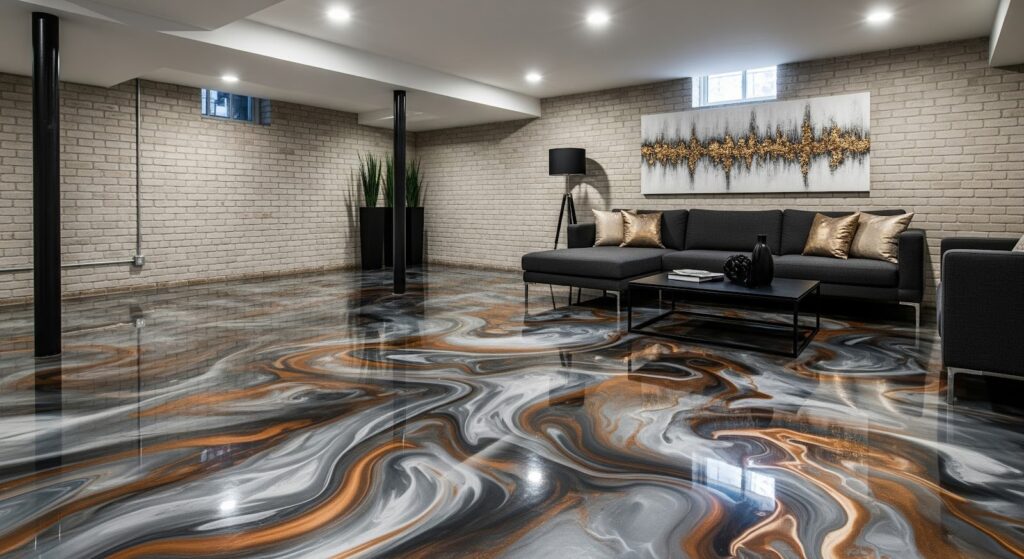
Each metallic epoxy flooring is unique. The final appearance depends on pigment choice, application technique, and lighting conditions.
Key features include:
- Seamless, joint-free surface
- High-gloss or satin finishes
- Three-dimensional visual depth
- Strong adhesion to concrete
- Fully sealed and non-porous surface
These characteristics make metallic epoxy ideal for basement spaces that need both style and durability.
Why Metallic Epoxy Works Especially Well in Basements?
Basements present specific challenges that many traditional flooring materials struggle to handle. Metallic epoxy addresses these challenges effectively.
Moisture Resistance
Basements are prone to moisture migration through concrete slabs. Metallic epoxy seals the surface, preventing water absorption and reducing the risk of mold, mildew, and odors.
Seamless Installation
Without grout lines or seams, metallic epoxy eliminates weak points where moisture, dirt, or bacteria can accumulate. This makes the basement easier to clean and maintain.
Light Reflection and Visual Expansion
Metallic epoxy reflects light, which helps brighten basements that have limited natural lighting. This reflective quality makes the space feel larger and more inviting.
Durability for Multi-Use Spaces
Basements often serve multiple purposes. Metallic epoxy handles foot traffic, furniture movement, workout equipment, and occasional spills without damage.
Design Possibilities for Metallic Epoxy Basement Floors
One of the biggest advantages of metallic epoxy is its design flexibility. Homeowners are not limited to flat or industrial looks.
Popular Basement Design Styles
- Marble-inspired silver and gray blends
- Warm bronze or copper tones for cozy spaces
- Deep charcoal or black for media rooms
- Blue or pearl finishes for modern lounges
- Subtle satin finishes for understated elegance
Designs can be customized to match furniture, wall colors, and lighting schemes.
Is Metallic Epoxy Comfortable for Living Spaces?
Basement floors should feel comfortable, not industrial.
Metallic epoxy:
- Feels solid but smooth underfoot
- Works well with area rugs for warmth
- Is compatible with radiant floor heating
- Does not trap dust or allergens
This makes it suitable for family rooms, playrooms, and home offices.
Slip Resistance and Safety in Basements
Safety is an important consideration, especially in basements that may experience occasional moisture.
Slip resistance can be added by:
- Incorporating clear traction additives in the topcoat
- Choosing satin or semi-gloss finishes
- Adding textured zones in utility areas
These options maintain aesthetics while improving safety.
How Metallic Epoxy Is Installed in a Basement?
Professional installation is essential for long-term success, particularly in below-grade environments.
Typical Installation Process
- Concrete inspection and moisture testing
- Mechanical surface preparation
- Crack and joint repair
- Primer application
- Metallic epoxy base layer installation
- Artistic manipulation of pigments
- Protective clear topcoat application
Moisture testing is especially critical in basements to prevent future adhesion issues.
How Long Do Metallic Epoxy Basement Floors Last
With proper installation and maintenance, metallic epoxy basement floors typically last 10 to 20 years.
Longevity depends on:
- Moisture control
- Surface preparation quality
- Traffic levels
- Maintenance habits
Recoating the protective top layer can significantly extend lifespan without removing the entire system.
Maintenance Requirements for Basement Epoxy Floors
Metallic epoxy floors are low-maintenance and well-suited for residential basement flooring.
Recommended Care
- Sweep or vacuum regularly
- Clean with pH-neutral cleaners
- Avoid abrasive scrubbers
- Clean spills promptly
- Inspect topcoat periodically
This simple routine keeps the floor looking new for years.
Metallic Epoxy vs Other Basement Flooring Options
| Flooring Type | Moisture Resistance | Appearance | Maintenance | Lifespan |
| Metallic Epoxy | Excellent | Luxury, 3D effect | Low | 10–20 years |
| Carpet | Poor | Soft | High | 5–8 years |
| Vinyl Plank | Good | Moderate | Low | 8–15 years |
| Tile | Good | Traditional | Medium | 10–20 years |
| Polished Concrete | Moderate | Industrial | Medium | 20+ years |
Metallic epoxy stands out for basements where design and moisture control are equally important.
Conclusion
Metallic epoxy resin floors have the ability to completely redefine a residential basement. By combining seamless design, moisture resistance, and long-lasting durability, they address the unique challenges of below-grade spaces while delivering a high-end finish.
With thoughtful design choices, proper installation, and simple maintenance, a metallic epoxy basement floor can turn an overlooked space into one of the most impressive areas of the home.
FAQs
Is Metallic Epoxy a Good Choice for Your Basement?
Yes, for homeowners who want a modern, durable, and moisture-resistant basement floor, metallic epoxy is an excellent option. It transforms underutilized spaces into polished, functional living areas that feel intentional and refined.
Can metallic epoxy handle basement moisture?
Yes, when moisture levels are tested, and the system is installed correctly.
Do metallic epoxy floors feel cold?
Yes, similar to stone or ceramic tiles, metallic epoxy floors can have a cold feeling underfoot.
Can metallic epoxy be installed over existing concrete?
Yes, if the slab is structurally sound and properly prepared.