


If you think concrete floors are just for warehouses, think again. Today’s concrete floor options offer style, strength, and versatility for homes, offices, and industrial spaces alike. From polished and stained finishes to epoxy coatings and stamped designs, concrete can be customized to fit almost any look or function.
It’s durable, low-maintenance, and surprisingly stylish when done right. In this comprehensive guide, we’ll explore the most popular concrete flooring types, their pros and cons, and how to choose the one that best fits your space, whether you’re going for a sleek modern vibe or a tough, industrial finish.
Types of Concrete Floor Finishes
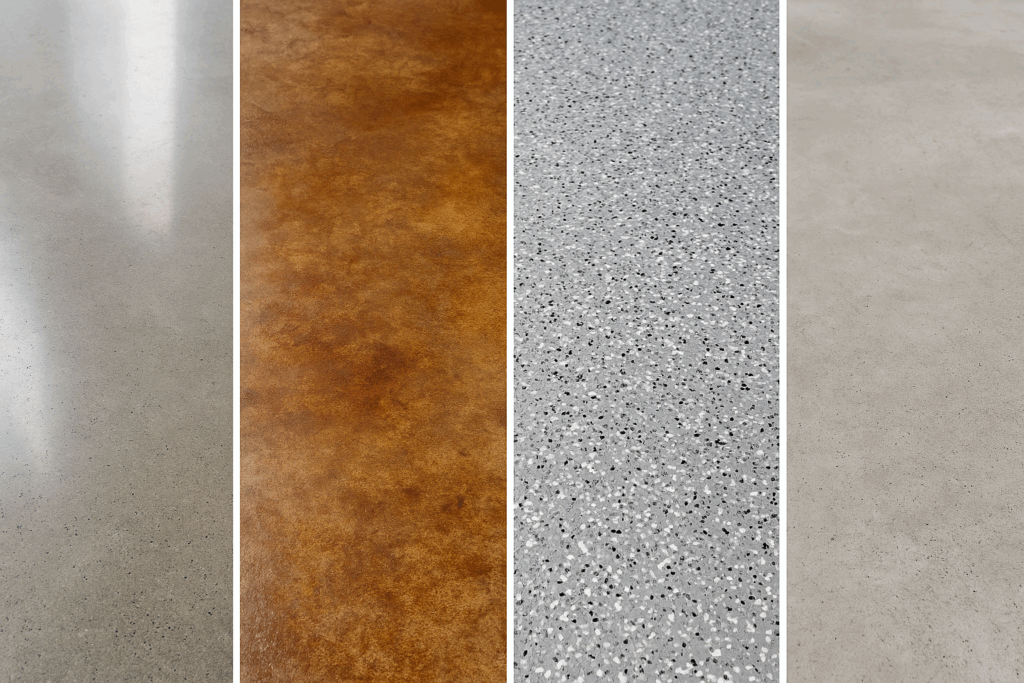
Concrete floors come in various types, each offering unique benefits and aesthetics. From polished to epoxy-coated, the options are vast and cater to different needs and preferences. Understanding these types can help you choose the best option for your space.
Different types of concrete floors include polished, epoxy-coated, stained, micro-topping, decorative stamped, exposed aggregate, and metallic or terrazzo-style systems. Each type offers distinct characteristics and can be tailored to suit specific design requirements.
Polished Concrete Floors
Polished concrete floors are a popular choice for their sleek and modern appearance. They are created by grinding the concrete surface to achieve a smooth, glossy finish. This process not only enhances the floor’s aesthetic appeal but also increases its durability.
Polished concrete floors are low-maintenance and resistant to stains and scratches. They reflect light, making spaces appear brighter and more spacious. These floors are ideal for both residential and commercial settings, offering a contemporary look that complements various interior styles.
- Sleek and modern appearance
- Low-maintenance and durable
- Reflects light for a brighter space
Epoxy-Coated Concrete
Epoxy-coated concrete floors are known for their high resistance to chemicals, stains, and abrasions. This type of flooring involves applying a layer of epoxy resin over the concrete surface, creating a protective and decorative coating.
Epoxy coatings are available in a wide range of colors and finishes, allowing for customization to match any design scheme. They are commonly used in garages, workshops, and industrial settings due to their durability and easy maintenance.
- High resistance to chemicals and stains
- Customizable with various colors and finishes
- Ideal for garages and industrial spaces
Stained Concrete (Acid & Water-Based)
Stained concrete floors offer a unique and artistic look, with the ability to mimic the appearance of natural stone or marble. Acid-based stains react with the concrete to create rich, variegated colors, while water-based stains provide a broader color palette.
Stained concrete is a cost-effective way to enhance the aesthetic appeal of a space. It is suitable for both indoor and outdoor applications, providing a durable and visually appealing flooring option.
- Mimics natural stone or marble
- Cost-effective and visually appealing
- Suitable for indoor and outdoor use
Micro-Topping & Overlay Concrete Finishes
Micro-topping and overlay finishes are thin layers applied over existing concrete surfaces to refresh their appearance. These finishes can be customized with various textures and colors, offering a new look without the need for complete floor replacement.
Micro-toppings are ideal for covering imperfections and providing a smooth, uniform surface. They are commonly used in residential and commercial spaces to achieve a modern and updated look.
- Refreshes existing concrete surfaces
- Customizable with textures and colors
- Covers imperfections for a smooth finish
Decorative Stamped Concrete
Decorative stamped concrete is a popular choice for outdoor spaces, offering the look of natural stone, brick, or tile at a fraction of the cost. This technique involves pressing patterns into the concrete before it sets, creating a textured and decorative surface.
Stamped concrete is durable and low-maintenance, making it ideal for patios, driveways, and walkways. It provides a high-end appearance without the high-end price tag, enhancing the curb appeal of any property.
- Mimics natural stone, brick, or tile
- Durable and low-maintenance
- Ideal for outdoor spaces
Exposed Aggregate Concrete
Exposed aggregate concrete is created by removing the top layer of cement paste to reveal the underlying aggregates. This finish offers a unique and textured appearance, with the aggregates providing natural color and interest.
Exposed aggregate is slip-resistant and durable, making it suitable for driveways, pool decks, and other outdoor areas. It is a popular choice for those seeking a natural and rustic look.
- Unique and textured appearance
- Slip-resistant and durable
- Suitable for outdoor areas
Metallic & Terrazzo-Style Concrete Systems
Metallic and terrazzo-style concrete systems offer a luxurious and eye-catching finish. Metallic coatings create a shimmering, reflective surface, while terrazzo-style systems incorporate chips of marble or glass for a speckled effect.
These finishes are ideal for high-end residential and commercial spaces, providing a sophisticated and elegant look. They are durable and easy to maintain, making them a practical choice for busy environments.
- Luxurious and eye-catching finish
- Ideal for high-end spaces
- Durable and easy to maintain
Best Concrete Floors for Residential Spaces
Living Rooms and Modern Interiors

Concrete floors are an excellent choice for living rooms and modern interiors, offering a sleek and contemporary look. They can be polished or stained to complement various design styles, from minimalist to industrial.
In addition to their aesthetic appeal, concrete floors are durable and easy to clean, making them ideal for high-traffic areas. They can be paired with area rugs and furniture to create a warm and inviting atmosphere.
- Sleek and contemporary look
- Durable and easy to clean
- Complements various design styles
Kitchens and High-Moisture Spaces
Kitchens, bathrooms, and laundry rooms require flooring that can withstand moisture, spills, and heavy daily use. Polished concrete, epoxy-sealed concrete, and microcement are top choices due to their water-resistant properties, seamless finish, and easy cleaning. These surfaces prevent mold growth, resist staining from food or oils, and maintain a contemporary look that suits modern interiors. For extra safety, homeowners can opt for anti-slip coatings to provide better traction in wet zones, especially valuable in family homes.
Garage Floors and Workshops
Garages and workshops demand a flooring solution that can handle vehicles, tools, chemical spills, and impact. Epoxy-coated concrete and polyurethane flooring systems are ideal because they deliver maximum durability, abrasion resistance, and easy-clean surfaces. These coatings protect the concrete from oil, fuel, and tire marks while offering a polished appearance and long-term performance.
Outdoor Patios, Pool Decks, and Driveways
Outdoor surfaces in residential spaces demand flooring that can handle UV exposure, temperature changes, moisture, and heavy foot or vehicle traffic. Stamped concrete, textured epoxy coatings, and exposed aggregate finishes are popular choices for pool decks due to their slip-resistant textures, stylish appearance, and long-lasting durability. These surfaces can mimic natural stone, tiles, or wood while providing superior strength against cracking and fading.
For poolside areas and patios, anti-slip sealers and UV-stable coatings are essential to prevent discoloration and maintain traction in wet conditions. Driveways benefit from polyurethane-reinforced concrete or high-performance sealers, ensuring resistance to tire marks, oil stains, and heat. With the right finish and professional installation, concrete delivers a beautiful, weather-resistant, and low-maintenance outdoor surface that enhances curb appeal and withstands Dubai’s harsh climate.
Best Concrete Floors for Commercial and Industrial Use

Retail Stores and Luxury Showrooms
Retail outlets and showrooms require flooring that feels premium, modern, and durable. Polished concrete, stained concrete, and metallic epoxy finishes thrive in these spaces thanks to their high-gloss sheen, seamless look, and resistance to foot traffic and rolling loads. These finishes reflect light beautifully, support brand aesthetics, and enhance the visual appeal of luxury boutiques, auto galleries, jewelry stores, and lifestyle showrooms while remaining easy to clean and maintain.
Warehouses and Distribution Centers
For warehouses and distribution hubs, performance is the top priority. Densified polished concrete, heavy-duty epoxy coatings, and polyurethane systems are engineered to handle forklifts, pallet movement, mechanical loads, and chemical spills. These surfaces minimize dust, resist abrasion, and support long-term industrial operations, making them ideal for fulfillment centers, cold storage units, and logistics facilities.
Restaurants, Cafés, and Hospitality Areas
Food and beverage venues need flooring that is sanitary, slip-resistant, and tough enough for constant cleaning and spills. Antimicrobial epoxy, quartz-broadcast floors, and micro-topping concrete finishes provide seamless coverage that prevents bacteria buildup, grease absorption, and odor retention. Beyond practicality, these surfaces offer stylish finishes perfect for coffee shops, fine-dining spaces, hotel lobbies, and lounges, aligning with contemporary hospitality design trends.
Healthcare and Pharmaceutical Facilities
Medical environments demand strict hygiene, safety, and chemical resistance. Antibacterial epoxy, ESD-protected flooring, and chemical-resistant polyurethane systems create smooth, joint-free floors that support infection control and withstand disinfectants. These systems are built for hospitals, clinics, laboratories, diagnostic centers, and clean rooms, ensuring regulatory compliance and maintaining sterile conditions.
Schools, Gyms, and Public Buildings
Educational institutions and public facilities require surfaces that can handle heavy foot traffic, sports activity, and frequent equipment movement. Polished concrete, rubber-enhanced epoxy, and sealed anti-slip concrete are excellent options for schools, fitness centers, auditoriums, and government buildings. These systems reduce dust, improve air quality, and maintain long-term durability, even in high-use environments.
Factors to Consider When Choosing Concrete Flooring
Foot Traffic and Load Requirements
When choosing concrete flooring, it’s important to consider the level of foot traffic and load requirements. Different areas may require different levels of durability and strength to accommodate the intended use.
Concrete floors can be customized with various finishes and coatings to enhance their durability and resistance to wear. Understanding the specific needs of the space will help determine the best flooring option.
- Consider foot traffic and load requirements
- Customize with finishes and coatings
- Determine the best option for the space
Surface Preparation and Moisture Levels
Proper surface preparation is crucial for the successful installation of concrete floors. Moisture levels must be assessed and managed to prevent issues such as cracking and delamination.
Surface preparation involves cleaning, repairing, and priming the concrete to ensure a strong bond with the chosen finish. Addressing moisture levels is essential to prevent long-term damage and ensure the longevity of the floor.
- Proper surface preparation is crucial
- Assess and manage moisture levels
- Prevent long-term damage
Temperature and UV Exposure
Temperature and UV exposure can impact the performance and appearance of concrete floors. In outdoor settings, UV-resistant coatings may be necessary to prevent fading and discoloration.
Temperature fluctuations can cause expansion and contraction, leading to cracking and other issues. Choosing the right finish and coating can help mitigate these effects and ensure the floor’s durability.
- Consider temperature and UV exposure
- Use UV-resistant coatings for outdoor areas
- Mitigate effects of temperature fluctuations
Aesthetic Requirements and Design Preferences
Aesthetic requirements and design preferences play a significant role in choosing concrete flooring. The wide range of finishes and colors available allows for customization to match any design scheme.
Concrete floors can be tailored to achieve specific looks, from sleek and modern to rustic and natural. Understanding the desired aesthetic will help guide the selection process and ensure a cohesive design.
- Consider aesthetic requirements and preferences
- Customize with finishes and colors
- Achieve specific design looks
Maintenance and Longevity Expectations
Maintenance and longevity expectations are important factors to consider when choosing concrete flooring. Different finishes and coatings may require varying levels of maintenance to preserve their appearance and performance.
Concrete floors are generally low-maintenance, but regular cleaning and occasional resealing may be necessary to extend their lifespan. Understanding the maintenance requirements will help ensure the floor remains in optimal condition.
- Consider maintenance and longevity expectations
- Regular cleaning and resealing may be necessary
- Ensure optimal condition of the floor
Installation Timeline and Budget
The installation timeline and budget are critical considerations when selecting concrete flooring. Different types of concrete floors may have varying installation times and costs, impacting the overall project timeline and budget.
It’s important to work with a reputable contractor, such as Duramen Texas, to ensure a smooth and efficient installation process. Understanding the costs and timeline will help manage expectations and ensure a successful project.
- Consider installation timeline and budget
- Work with a reputable contractor
- Manage expectations for a successful project
Pros and Cons of Concrete Flooring Options
Benefits of Concrete Floors
Concrete floors offer numerous benefits, making them a popular choice for various applications. They are durable, low-maintenance, and customizable, providing a versatile and cost-effective flooring solution.
Concrete floors are also environmentally friendly, as they can be made from recycled materials and reduce the need for additional flooring materials. Their thermal mass properties help regulate indoor temperatures, contributing to energy efficiency.
- Durable and low-maintenance
- Customizable and cost-effective
- Environmentally friendly and energy-efficient
Common Drawbacks and Limitations
Despite their many benefits, concrete floors have some drawbacks and limitations. They can be hard and cold underfoot, making them less comfortable for prolonged standing or walking.
Concrete floors may also be prone to cracking, especially if not properly installed or maintained. They can be slippery when wet, posing a safety risk in certain environments.
- Hard and cold underfoot
- Prone to cracking if not properly maintained
- Can be slippery when wet
Common Problems & Solutions With Concrete Flooring
Cracking and Surface Imperfections
Cracking and surface imperfections are common issues with concrete flooring. These problems can arise from improper installation, temperature fluctuations, or moisture levels.
To address cracking and imperfections, it’s important to ensure proper installation and surface preparation. Regular maintenance and timely repairs can help prevent further damage and preserve the floor’s appearance.
- Common issues include cracking and imperfections
- Ensure proper installation and surface preparation
- Regular maintenance and repairs are essential
Moisture and Vapor Transmission Issues
Moisture and vapor transmission can lead to problems such as delamination and mold growth in concrete floors. Proper moisture management is crucial to prevent these issues and ensure the floor’s longevity.
Moisture barriers and sealants can be applied to protect the concrete from moisture intrusion. Regular monitoring and maintenance can help identify and address moisture-related problems early on.
- Moisture and vapor transmission can cause issues
- Use moisture barriers and sealants
- Regular monitoring and maintenance are important
Staining and Chemical Damage
Staining and chemical damage can affect the appearance and performance of concrete floors. Spills and exposure to harsh chemicals can lead to discoloration and deterioration.
To prevent staining and chemical damage, it’s important to apply protective coatings and sealants. Regular cleaning and prompt spill cleanup can help maintain the floor’s appearance and integrity.
- Staining and chemical damage can occur
- Apply protective coatings and sealants
- Regular cleaning and prompt spill cleanup are essential
Slippery Surfaces and Safety Concerns
Slippery surfaces can pose safety concerns, especially in areas prone to moisture or spills. Certain finishes and coatings can increase the risk of slipping, leading to potential accidents.
To address slippery surfaces, non-slip additives can be incorporated into the finish or coating. Regular cleaning and maintenance can help reduce the risk of slipping and ensure a safe environment.
- Slippery surfaces can pose safety concerns
- Use non-slip additives in finishes and coatings
- Regular cleaning and maintenance are important
Final Thoughts
By understanding the benefits, limitations, and factors to consider, you can make an informed decision that meets your specific needs and preferences. Whether you’re looking for a durable and low-maintenance option or a stylish and customizable solution, concrete floors offer a versatile and cost-effective choice for any space.
FAQs
How much does commercial epoxy flooring cost
The cost of commercial epoxy flooring varies depending on factors such as the size of the area, the type of epoxy used, and the complexity of the installation. On average, prices can range from $3 to $12 per square foot. It’s important to obtain quotes from reputable contractors to get an accurate estimate for your specific project.
What are the benefits of industrial concrete flooring
Industrial concrete flooring offers numerous benefits, including durability, low maintenance, and resistance to heavy loads and chemicals. These floors are designed to withstand the demands of industrial environments, providing a long-lasting and cost-effective solution. They are also customizable with various finishes and coatings to meet specific needs.
Are epoxy floors good for high-traffic areas
Yes, epoxy floors are an excellent choice for high-traffic areas due to their durability and resistance to wear and tear. The epoxy coating provides a protective layer that can withstand heavy foot traffic and equipment, making it ideal for commercial and industrial settings. Additionally, epoxy floors are easy to clean and maintain, ensuring a pristine appearance even in busy environments.