


Epoxy flooring is a popular choice for restaurants due to its durability and aesthetic appeal. This type of flooring is made from a combination of resin and hardener, creating a strong, seamless surface. Restaurants benefit from epoxy flooring because it can withstand heavy foot traffic, spills, and frequent cleaning. Additionally, epoxy flooring offers a variety of design options, making it easy to customize the look of your restaurant.
Epoxy flooring is not only functional but also versatile. It can be used in various areas of a restaurant, including kitchens, dining areas, and restrooms. The different types of epoxy flooring available allow restaurant owners to choose the best option for their specific needs. Whether you need a slip-resistant surface for the kitchen or a decorative finish for the dining area, epoxy flooring can meet your requirements.
- Durability: Withstands heavy foot traffic and frequent cleaning.
- Versatility: Suitable for kitchens, dining areas, and restrooms.
- Customization: Offers various design options.
Benefits of Epoxy Flooring in Restaurants
Types of Epoxy Flooring for Restaurants
There are several types of epoxy flooring available for restaurants, each with its unique properties. Self-leveling epoxy is ideal for creating a smooth, even surface, while epoxy mortar is perfect for areas that require extra strength. Quartz-filled epoxy is a great choice for decorative purposes, offering a variety of color options.
Choosing the right type of epoxy flooring depends on the specific needs of your restaurant. For example, if you need a floor that can handle heavy equipment, epoxy mortar might be the best choice. On the other hand, if aesthetics are a priority, quartz-filled epoxy could be the way to go.
- Self-Leveling Epoxy: Creates a smooth, even surface.
- Epoxy Mortar: Provides extra strength for heavy equipment areas.
- Quartz-Filled Epoxy: Offers decorative options with various colors.
Durability and Maintenance of Epoxy Floors
Epoxy floors are known for their durability, making them an excellent choice for busy restaurants. They can withstand heavy foot traffic, spills, and frequent cleaning without showing signs of wear. This durability ensures that your restaurant’s flooring will look great for years to come.
Maintaining epoxy floors is relatively easy. Regular sweeping and mopping are usually sufficient to keep them clean. Additionally, epoxy floors are resistant to stains and chemicals, making them ideal for restaurant environments where spills are common.
- Durability: Resistant to heavy foot traffic and spills.
- Easy Maintenance: Simple cleaning with sweeping and mopping.
- Stain and Chemical Resistance: Ideal for restaurant environments.
Advantages of Epoxy Flooring in Restaurants

How Epoxy Flooring Enhances Safety and Hygiene
Safety and hygiene are top priorities in any restaurant, and epoxy flooring can help enhance both. Epoxy floors are seamless, reducing the risk of bacteria and mold growth. This makes them a hygienic choice for areas where food is prepared and served.
In addition to hygiene, epoxy flooring can improve safety by providing a slip-resistant surface. This is especially important in kitchens and other areas where spills are likely to occur. By choosing epoxy flooring, restaurant owners can create a safer environment for both employees and customers.
- Seamless Surface: Reduces risk of bacteria and mold growth.
- Slip-Resistant: Enhances safety in spill-prone areas.
- Hygienic: Ideal for food preparation and serving areas.
Installation Process of Epoxy Flooring
Steps Involved in Installing Epoxy Floors
The installation process of epoxy flooring involves several steps to ensure a smooth and durable finish. First, the existing floor must be thoroughly cleaned and prepared. This may involve removing old flooring, repairing any damage, and ensuring the surface is level.
Once the floor is prepared, the epoxy mixture is applied in layers. Each layer must be allowed to cure before the next is applied. This process ensures a strong bond and a seamless finish. Finally, a topcoat is applied to protect the surface and enhance its appearance.
- Floor Preparation: Clean and repair the existing surface.
- Layer Application: Apply epoxy in layers, allowing each to cure.
- Topcoat Application: Protects and enhances the floor’s appearance.
Timeframe and Considerations for Installation
The timeframe for installing epoxy flooring can vary depending on the size of the area and the type of epoxy used. Generally, the process can take anywhere from a few days to a week. It’s important to plan for this downtime to minimize disruption to your restaurant’s operations.
Considerations for installation include the condition of the existing floor, the desired finish, and any specific requirements for your restaurant. Working with a professional installer, like Duramen Texas, can help ensure a smooth and efficient installation process.
- Installation Timeframe: Typically takes a few days to a week.
- Planning: Minimize disruption to restaurant operations.
- Professional Installation: Ensures a smooth and efficient process.
Food-Grade Epoxy Flooring Overview
Characteristics of Food-Grade Epoxy
Food-grade epoxy flooring is specifically designed for areas where food is prepared and served. This type of epoxy is non-toxic and meets strict health and safety standards. It provides a seamless, easy-to-clean surface that helps maintain a hygienic environment.
In addition to its hygienic properties, food-grade epoxy is also durable and resistant to stains and chemicals. This makes it an ideal choice for restaurant kitchens and other food preparation areas.
- Non-Toxic: Meets health and safety standards.
- Seamless Surface: Easy to clean and maintain.
- Durable and Resistant: Withstands stains and chemicals.
Compliance with Health and Safety Standards
Compliance with health and safety standards is crucial for any restaurant, and food-grade epoxy flooring can help achieve this. This type of flooring is designed to meet the requirements set by health authorities, ensuring a safe and hygienic environment for food preparation.
By choosing food-grade epoxy flooring, restaurant owners can have peace of mind knowing that their flooring meets the necessary standards. This not only protects the health of customers and employees but also helps avoid potential fines and penalties.
- Health Compliance: Meets health authority requirements.
- Safety Assurance: Ensures a safe environment for food preparation.
- Avoids Penalties: Helps prevent fines and penalties.
Cost of Epoxy Flooring for Restaurants
Factors Influencing the Cost
The cost of epoxy flooring for restaurants can vary based on several factors. The size of the area, the type of epoxy used, and the complexity of the design all play a role in determining the final cost. Additionally, the condition of the existing floor and any necessary repairs can also impact the price.
It’s important to consider these factors when budgeting for epoxy flooring. Working with a professional installer can help provide an accurate estimate and ensure that you get the best value for your investment.
- Area Size: Larger areas may cost more.
- Epoxy Type: Different types have varying costs.
- Design Complexity: Intricate designs may increase the price.
Cost Comparison with Other Flooring Options
When comparing the cost of epoxy flooring to other options, it’s important to consider both the initial investment and the long-term benefits. While epoxy flooring may have a higher upfront cost than some alternatives, its durability and low maintenance requirements can result in cost savings over time.
For example, while tile flooring may be cheaper initially, it may require more frequent repairs and replacements. In contrast, epoxy flooring’s durability can lead to lower long-term costs, making it a cost-effective choice for restaurants.
- Initial Investment: May be higher than some alternatives.
- Long-Term Savings: Durability leads to lower maintenance costs.
- Cost-Effectiveness: Offers value over time compared to other options.
Cost Considerations for Epoxy Flooring
Average Cost Estimates for Restaurant Spaces
The average cost of epoxy flooring for restaurant spaces can vary, but it typically ranges from $3 to $12 per square foot. This estimate includes both materials and installation. However, the final cost can be influenced by factors such as the type of epoxy used and the complexity of the design.
It’s important to obtain multiple quotes from professional installers to ensure you get the best price. Companies like Duramen Texas can provide detailed estimates and help you understand the costs involved in your specific project.
- Cost Range: Typically $10 to $20 per square foot, depending on the condition of the existing flooring.
- Includes Materials and Installation: Comprehensive pricing.
- Professional Quotes: Obtain multiple estimates for accuracy.
Budgeting for Epoxy Flooring Projects
Budgeting for an epoxy flooring project involves more than just considering the cost per square foot. It’s important to factor in any additional expenses, such as floor preparation, repairs, and design customization. By accounting for these costs, you can create a realistic budget that meets your needs.
Working with a professional installer can help you understand the full scope of the project and ensure that your budget is sufficient. This can help prevent unexpected expenses and ensure a smooth installation process.
- Comprehensive Budgeting: Consider all project costs.
- Additional Expenses: Include preparation and customization.
- Professional Guidance: Ensure a realistic and sufficient budget.
Design Options for Epoxy Restaurant Flooring
Customization with Styles and Patterns
One of the key advantages of epoxy flooring is its ability to be customized with various styles and patterns. This allows restaurant owners to create a unique and visually appealing environment that reflects their brand. From solid colors to intricate designs, the possibilities are endless.
Customization options include adding logos, creating geometric patterns, or using different colors to define specific areas. This level of personalization can enhance the overall aesthetic of your restaurant and create a memorable experience for customers.
- Unique Styles: Create a visually appealing environment.
- Brand Reflection: Incorporate logos and brand colors.
- Area Definition: Use colors and patterns to define spaces.
Popular Trends in Epoxy Flooring for 2024
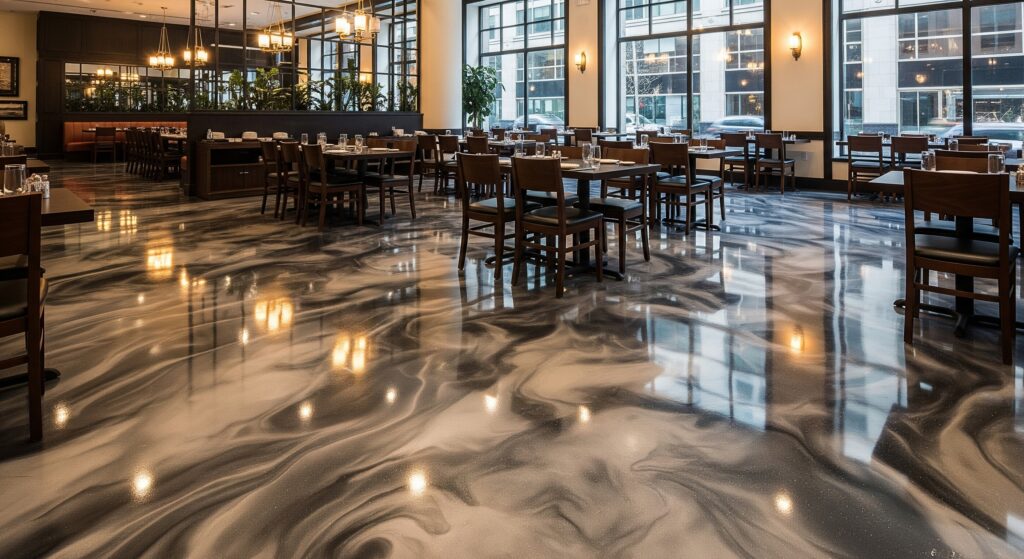
As we look ahead to 2024, several trends are emerging in the world of epoxy flooring. One popular trend is the use of metallic epoxy, which creates a stunning, reflective surface that adds a touch of luxury to any space. Another trend is the incorporation of natural elements, such as wood or stone patterns, to create a warm and inviting atmosphere.
These trends offer restaurant owners the opportunity to stay ahead of the curve and create a modern, stylish environment. By incorporating these design elements, you can ensure that your restaurant remains visually appealing and on-trend.
- Metallic Epoxy: Adds luxury with a reflective surface.
- Natural Elements: Incorporate wood or stone patterns.
- Modern Style: Stay ahead of design trends.
Addressing Common Concerns About Epoxy Flooring
Are Epoxy Floors Slippery?
Epoxy floors can be slippery when wet, which is a common concern for restaurant owners. However, there are solutions available to address this issue. By adding a slip-resistant additive to the epoxy mixture, you can create a safer surface that reduces the risk of slips and falls.
It’s important to work with a professional installer to ensure that the slip-resistant properties are properly incorporated into the flooring. This can help create a safer environment for both employees and customers.
- Slip-Resistant Additives: Reduce the risk of slips and falls.
- Professional Installation: Ensure proper incorporation.
- Safety Enhancement: Create a safer environment.
Solutions for Non-Slip Epoxy Surfaces
To create a non-slip epoxy surface, several solutions can be implemented. One option is to add a textured finish to the epoxy, which provides additional grip. Another solution is to use a slip-resistant topcoat, which enhances the floor’s safety without compromising its appearance.
These solutions can be tailored to meet the specific needs of your restaurant, ensuring that the flooring is both safe and visually appealing. By addressing slip concerns, you can create a more secure environment for everyone.
- Textured Finish: Provides additional grip.
- Slip-Resistant Topcoat: Enhances safety without affecting appearance.
- Tailored Solutions: Meet specific restaurant needs.
Epoxy Flooring vs. Other Flooring Types
Epoxy Flooring vs. Tiles
When comparing epoxy flooring to tiles, several factors come into play. Epoxy flooring offers a seamless surface, which reduces the risk of bacteria growth and makes cleaning easier. In contrast, tiles have grout lines that can harbor dirt and bacteria, requiring more maintenance.
Additionally, epoxy flooring is more durable and resistant to stains and chemicals than tiles. This makes it a better choice for high-traffic areas and environments where spills are common. While tiles may offer a wider range of design options, epoxy flooring provides a more practical solution for restaurants.
- Seamless Surface: Easier to clean and maintain.
- Durability: More resistant to stains and chemicals.
- Practical Solution: Ideal for high-traffic areas.
Best Flooring Options for Commercial Kitchens
For commercial kitchens, the best flooring options are those that offer durability, safety, and hygiene. Epoxy flooring meets all these criteria, making it an excellent choice for kitchen environments. Its seamless surface is easy to clean, and its slip-resistant properties enhance safety.
Other options, such as vinyl or rubber flooring, may also be suitable for commercial kitchens. However, epoxy flooring’s combination of durability, hygiene, and safety makes it a top choice for restaurant owners looking to create a functional and efficient kitchen space.
- Durability and Hygiene: Ideal for kitchen environments.
- Slip-Resistant: Enhances safety in the kitchen.
- Top Choice: Combines functionality and efficiency.
Services Provided by Duramen Texas for Restaurant Floors
Comprehensive Flooring Solutions
Duramen Texas offers comprehensive flooring solutions for restaurants, including the installation of epoxy flooring. Their team of experts can help you choose the right type of epoxy for your specific needs and ensure a smooth installation process. With their experience and expertise, you can trust that your restaurant’s flooring will be both functional and visually appealing.
In addition to epoxy flooring, Duramen Texas provides a range of other flooring options, allowing you to find the perfect solution for your restaurant. Their commitment to quality and customer satisfaction makes them a reliable choice for your flooring needs.
- Expert Installation: Ensure a smooth and efficient process.
- Range of Options: Find the perfect solution for your restaurant.
- Quality and Satisfaction: Trust in their commitment to excellence.
Requesting a Free Estimate
If you’re considering epoxy flooring for your restaurant, Duramen Texas offers free estimates to help you understand the costs involved. By providing detailed quotes, they can help you make an informed decision and ensure that your project stays within budget.
Requesting a free estimate is a simple process, and their team is available to answer any questions you may have. With their guidance, you can feel confident in your choice of flooring and enjoy the benefits of a durable and attractive surface.
- Free Estimates: Understand the costs involved.
- Informed Decision: Make the best choice for your restaurant.
- Expert Guidance: Get answers to your questions.
Examples of Restaurant Floors by Duramen Texas
Case Studies and Success Stories
Duramen Texas has a proven track record of success in installing epoxy flooring for restaurants. Their case studies and success stories highlight the quality and durability of their work, showcasing the benefits of epoxy flooring in real-world settings.
These examples demonstrate how Duramen Texas can transform restaurant spaces with their expert installation services. By reviewing their past projects, you can gain insight into the possibilities of epoxy flooring and how it can enhance your restaurant.
- Proven Success: Highlight quality and durability.
- Real-World Examples: Showcase the benefits of epoxy flooring.
- Transformative Results: See the possibilities for your restaurant.
Visual Gallery of Completed Projects
A visual gallery of completed projects by Duramen Texas provides a glimpse into the stunning results that can be achieved with epoxy flooring. From sleek, modern designs to more traditional styles, their gallery showcases the versatility and beauty of epoxy flooring.
By exploring their visual gallery, you can find inspiration for your own restaurant and see how epoxy flooring can enhance the overall aesthetic. With a range of styles and finishes available, the possibilities are endless.
- Stunning Results: Achieve beautiful and functional flooring.
- Versatility and Beauty: Explore a range of styles and finishes.
- Inspiration: Find ideas for your own restaurant.
Conclusion
Epoxy flooring offers a range of benefits for restaurants, from durability and hygiene to customization and safety. With various types and design options available, restaurant owners can find the perfect solution for their specific needs. By choosing a professional installer like Duramen Texas, you can ensure a smooth installation process and enjoy the long-term benefits of epoxy flooring.
Frequently Asked Questions
Is Epoxy Flooring Safe for Restaurants?
Yes, epoxy flooring is safe for restaurants. It provides a seamless, easy-to-clean surface that enhances hygiene and safety. Its slip-resistant properties also help reduce the risk of accidents in spill-prone areas.
Can You Use Laminate Flooring in a Commercial Kitchen?
Laminate flooring is not recommended for commercial kitchens. It is less durable and more susceptible to water damage compared to epoxy flooring. Epoxy flooring offers better durability and hygiene for kitchen environments.
What Type of Flooring is Best for a Commercial Kitchen?
Epoxy flooring is one of the best options for commercial kitchens. It offers durability, hygiene, and slip resistance, making it ideal for high-traffic and spill-prone areas. Other options include vinyl and rubber flooring.
How Long Does Epoxy Flooring Last in Restaurants?
Epoxy flooring can last for many years in restaurants, often up to 10-20 years with proper maintenance. Its durability and resistance to wear make it a long-lasting choice for high-traffic areas.
How to Maintain Epoxy Flooring for Longevity?
Maintaining epoxy flooring involves regular cleaning with sweeping and mopping. Avoid using harsh chemicals, and promptly clean up spills to prevent damage. Regular maintenance can help extend the lifespan of your epoxy flooring.