


Epoxy flooring is becoming a popular choice for restaurants due to its unique benefits. This type of flooring is made from a combination of resin and hardener, creating a durable and visually appealing surface. Restaurants are increasingly opting for epoxy flooring because it meets their specific needs for durability, aesthetics, and hygiene.
Epoxy flooring offers a seamless finish that is both attractive and functional. It can withstand the high foot traffic typical in restaurants, making it a practical choice for busy environments. Additionally, its customizable nature allows restaurant owners to choose from a variety of colors and patterns to match their brand and interior design.
- Durable and long-lasting
- Visually appealing with customization options
- Ideal for high-traffic areas
Benefits of Epoxy Flooring for Restaurants
Durability and Longevity
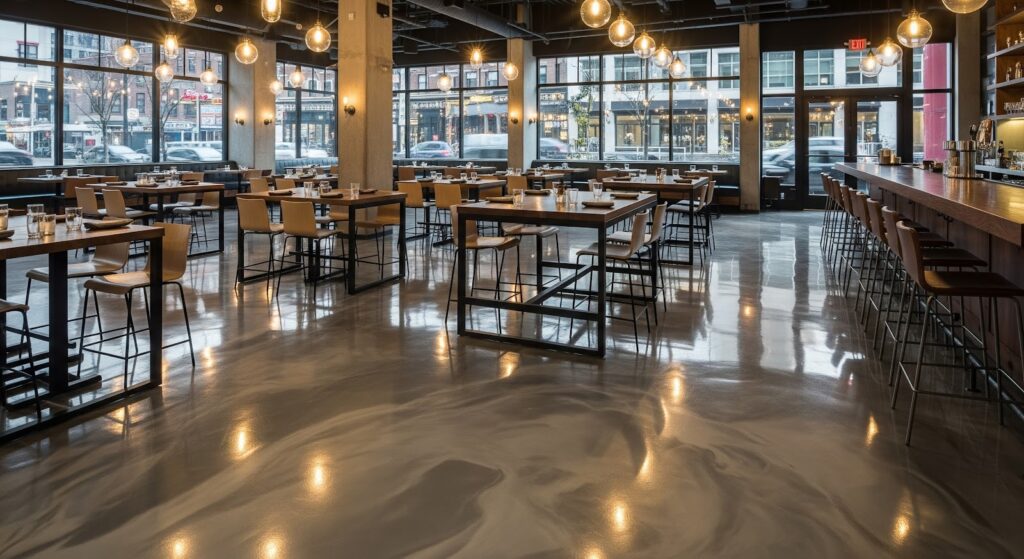
Epoxy flooring is renowned for its durability and longevity, making it an excellent choice for restaurants. It can withstand heavy foot traffic, spills, and the movement of furniture without showing signs of wear and tear. This resilience ensures that the flooring remains in good condition for many years, reducing the need for frequent replacements.
The longevity of epoxy flooring also translates to cost savings for restaurant owners. By investing in a durable flooring solution, restaurants can avoid the expenses associated with frequent repairs and replacements, ultimately improving their bottom line.
- Resistant to wear and tear
- Long-lasting with minimal maintenance
- Cost-effective over time
Aesthetic Appeal and Customization
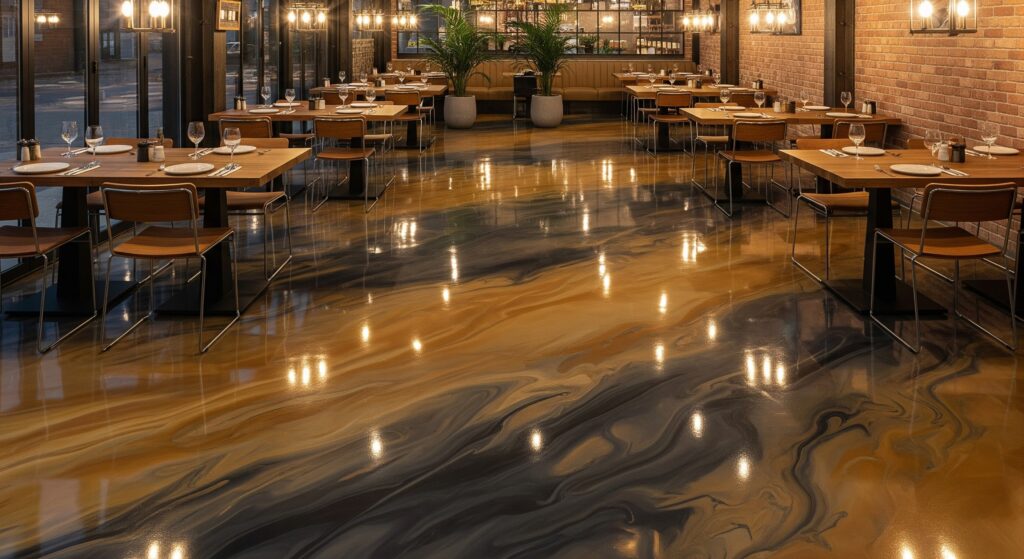
One of the standout features of epoxy flooring is its aesthetic appeal and customization options. Restaurant owners can choose from a wide range of colors, patterns, and finishes to create a unique look that complements their brand. This flexibility allows for creative designs that can enhance the overall dining experience for customers.
Customizable epoxy flooring can also be used to create specific zones within a restaurant, such as dining areas, kitchens, and restrooms. This not only improves the visual appeal but also helps in organizing the space effectively.
- Wide range of colors and patterns
- Enhances brand identity
- Creates distinct zones within the restaurant
Quick and Easy Installation
The installation process for epoxy flooring is quick and efficient, minimizing downtime for restaurants. This is particularly important for businesses that cannot afford to close for extended periods. Professional installers can complete the process swiftly, allowing restaurants to resume operations without significant disruption.
The ease of installation also means that restaurant owners can upgrade their flooring without a lengthy renovation process. This makes epoxy flooring a convenient option for those looking to improve their space quickly.
- Minimal downtime during installation
- Efficient and professional process
- Convenient for quick upgrades
Popularity of Epoxy Flooring in Restaurants
How Does Epoxy Flooring Enhance Restaurant Safety?
Epoxy flooring enhances restaurant safety by providing a non-slip surface that reduces the risk of accidents. This is crucial in environments where spills are common, such as kitchens and dining areas. The slip-resistant properties of epoxy flooring help protect both staff and customers from potential injuries.
In addition to its non-slip surface, epoxy flooring is also resistant to fire and heat, adding an extra layer of safety. This makes it an ideal choice for commercial kitchens where high temperatures are a constant concern.
- Non-slip surface for accident prevention
- Fire and heat resistant
- Ideal for kitchens and dining areas
What Makes Epoxy Flooring Cost-Effective for Restaurants?
Epoxy flooring is cost-effective for restaurants due to its durability and low maintenance requirements. The initial investment is offset by the long-term savings on repairs and replacements. Additionally, its easy maintenance reduces cleaning costs, making it a financially sound choice for restaurant owners.
The cost-effectiveness of epoxy flooring is further enhanced by its energy efficiency. The reflective surface of epoxy flooring can improve lighting in a restaurant, reducing the need for additional lighting fixtures and lowering energy bills.
- Low maintenance costs
- Long-term savings on repairs
- Energy-efficient with reflective properties
How Does Epoxy Flooring Contribute to a Hygienic Environment?
Epoxy flooring contributes to a hygienic environment by providing a seamless and non-porous surface that prevents the accumulation of dirt and bacteria. This is particularly important in restaurants where cleanliness is a top priority. The smooth surface of epoxy flooring makes it easy to clean and sanitize, ensuring a safe dining experience for customers.
The hygienic properties of epoxy flooring also extend to its resistance to mold and mildew. This is crucial in areas prone to moisture, such as kitchens and restrooms, where maintaining a clean environment is essential.
- Seamless and non-porous surface
- Easy to clean and sanitize
- Resistant to mold and mildew
Non-Slip and Spill Containment Features

Ensuring Safety in High-Traffic Areas
In high-traffic areas, safety is a primary concern for restaurant owners. Epoxy flooring addresses this issue by providing a non-slip surface that reduces the risk of slips and falls. This is especially important in busy dining areas where spills are common and can pose a hazard to both staff and customers.
The durability of epoxy flooring also ensures that it can withstand the constant movement of people and furniture without losing its non-slip properties. This makes it a reliable choice for maintaining safety in high-traffic areas.
- Non-slip surface for high-traffic areas
- Reduces risk of slips and falls
- Maintains safety over time
Effective Spill Management
Epoxy flooring is designed to handle spills effectively, making it an ideal choice for restaurants. Its non-porous surface prevents liquids from seeping into the floor, allowing for easy cleanup. This is crucial in maintaining a clean and safe environment, especially in areas where food and drinks are served.
The spill containment features of epoxy flooring also help prevent damage to the underlying structure. By keeping spills on the surface, epoxy flooring protects the subfloor from moisture-related issues, ensuring the longevity of the entire flooring system.
- Non-porous surface for spill containment
- Easy cleanup of spills
- Protects subfloor from moisture damage
Advantages of Epoxy Flooring in Commercial Kitchens
How Does Epoxy Flooring Prevent Bacterial Growth?
Epoxy flooring prevents bacterial growth by providing a seamless and non-porous surface that does not harbor bacteria. This is essential in commercial kitchens where hygiene is a top priority. The smooth surface of epoxy flooring makes it easy to clean and sanitize, reducing the risk of contamination.
The resistance of epoxy flooring to moisture also plays a role in preventing bacterial growth. By keeping the surface dry, epoxy flooring minimizes the conditions that bacteria need to thrive, ensuring a safe and hygienic environment.
- Seamless and non-porous surface
- Easy to clean and sanitize
- Moisture-resistant to prevent bacterial growth
Why Is Epoxy Flooring Ideal for Seamless Finishes?
Epoxy flooring is ideal for seamless finishes because it creates a smooth and continuous surface without joints or seams. This not only enhances the aesthetic appeal but also improves hygiene by eliminating crevices where dirt and bacteria can accumulate. The seamless finish of epoxy flooring is particularly beneficial in commercial kitchens where cleanliness is crucial.
The seamless nature of epoxy flooring also contributes to its durability. Without seams, there are fewer weak points that can lead to cracking or damage, ensuring a long-lasting and reliable flooring solution.
- Smooth and continuous surface
- Improves hygiene by eliminating crevices
- Durable with fewer weak points
What Styles and Patterns Are Available for Epoxy Flooring?
Epoxy flooring offers a wide range of styles and patterns, allowing restaurant owners to customize their space to match their brand and design preferences. From solid colors to intricate patterns, epoxy flooring can be tailored to create a unique and visually appealing environment.
The versatility of epoxy flooring also extends to its finishes, with options such as matte, gloss, and metallic available. This allows for further customization and the ability to create a specific ambiance within the restaurant.
- Wide range of colors and patterns
- Customizable finishes such as matte, gloss, and metallic
- Enhances brand identity and design
Easy Maintenance and Cleaning
Simplifying Daily Cleaning Routines
Epoxy flooring simplifies daily cleaning routines by providing a smooth and non-porous surface that is easy to clean. This is particularly beneficial for restaurants where maintaining a clean environment is essential. The ease of cleaning reduces the time and effort required for daily maintenance, allowing staff to focus on other important tasks.
The low maintenance requirements of epoxy flooring also contribute to cost savings. By reducing the need for specialized cleaning products and equipment, restaurants can lower their cleaning expenses and improve their bottom line.
- Smooth and non-porous surface for easy cleaning
- Reduces time and effort for daily maintenance
- Lowers cleaning expenses
Long-Term Maintenance Benefits
The long-term maintenance benefits of epoxy flooring make it a cost-effective choice for restaurants. Its durability and resistance to wear and tear mean that it requires minimal maintenance over its lifespan. This reduces the need for frequent repairs and replacements, saving restaurant owners both time and money.
In addition to its durability, epoxy flooring is also resistant to stains and chemicals, further reducing maintenance requirements. This makes it an ideal choice for restaurants where spills and exposure to cleaning agents are common.
- Durable and resistant to wear and tear
- Minimal maintenance over lifespan
- Resistant to stains and chemicals
Potential Drawbacks of Epoxy Flooring
What Are the Potential Downsides of Epoxy Flooring?
While epoxy flooring offers many benefits, there are potential downsides to consider. One of the main drawbacks is the initial cost, which can be higher than other flooring options. However, this is often offset by the long-term savings on maintenance and repairs.
Another potential downside is the installation process, which requires professional expertise. This can add to the overall cost and may require restaurants to close temporarily during installation. However, the quick installation process minimizes downtime, making it a manageable inconvenience.
- Higher initial cost compared to other options
- Requires professional installation
- Temporary closure during installation
How Does the Cost of Epoxy Flooring Compare to Other Options?
The cost of epoxy flooring can be higher than other flooring options, such as vinyl or laminate. However, its durability and low maintenance requirements often make it a more cost-effective choice in the long run. By reducing the need for frequent repairs and replacements, epoxy flooring can save restaurant owners money over time.
In addition to its long-term cost savings, epoxy flooring also offers energy efficiency benefits. Its reflective surface can improve lighting in a restaurant, reducing the need for additional lighting fixtures and lowering energy bills.
- Higher initial cost but cost-effective long-term
- Reduces need for repairs and replacements
- Energy-efficient with reflective properties
What Is the Typical Lifespan of Epoxy Flooring in Restaurants?
The typical lifespan of epoxy flooring in restaurants is between 10 to 20 years, depending on the level of foot traffic and maintenance. Its durability and resistance to wear and tear contribute to its long lifespan, making it a reliable choice for restaurant owners.
Regular maintenance and proper care can extend the lifespan of epoxy flooring, ensuring that it remains in good condition for many years. This makes it a cost-effective investment for restaurants looking for a long-lasting flooring solution.
- Lifespan of 10 to 20 years
- Durable and resistant to wear and tear
- Regular maintenance extends lifespan
Why Choose Duramen Texas for Your Restaurant’s Epoxy Flooring
Customizable Solutions for Every Restaurant
Duramen Texas offers customizable solutions for every restaurant, ensuring that each client receives a flooring solution tailored to their specific needs. With a wide range of colors, patterns, and finishes available, restaurant owners can create a unique look that complements their brand and design preferences.
The team at Duramen Texas works closely with clients to understand their requirements and provide personalized recommendations. This ensures that each restaurant receives a flooring solution that meets their functional and aesthetic needs.
- Tailored solutions for each restaurant
- Wide range of colors, patterns, and finishes
- Personalized recommendations from experts
Rapid Installation Process
Duramen Texas is known for its rapid installation process, minimizing downtime for restaurants. The professional team ensures that the installation is completed efficiently and to the highest standards, allowing restaurants to resume operations quickly.
The quick installation process is particularly beneficial for restaurants that cannot afford to close for extended periods. By choosing Duramen Texas, restaurant owners can upgrade their flooring without significant disruption to their business.
- Efficient and professional installation
- Minimizes downtime for restaurants
- High-quality standards
Proven Track Record in the Industry
Duramen Texas has a proven track record in the industry, with a reputation for delivering high-quality epoxy flooring solutions. Their expertise and experience make them a trusted choice for restaurant owners looking for reliable and durable flooring options.
The company’s commitment to customer satisfaction and quality ensures that each client receives a flooring solution that meets their needs and exceeds their expectations. This makes Duramen Texas a top choice for restaurants seeking epoxy flooring.
- Proven track record in the industry
- Trusted choice for restaurant owners
- Commitment to customer satisfaction and quality
Recent Trends in Restaurant Flooring
Comparing Epoxy and Polyurea Coatings
Epoxy and polyurea coatings are both popular choices for restaurant flooring, each offering unique benefits. Epoxy flooring is known for its durability and aesthetic appeal, while polyurea coatings offer faster curing times and increased flexibility.
When comparing the two, it’s important to consider the specific needs of the restaurant. Epoxy flooring is ideal for those seeking a durable and customizable solution, while polyurea coatings may be better suited for environments requiring rapid installation and flexibility.
- Epoxy: Durable and customizable
- Polyurea: Fast curing and flexible
- Consider specific needs of the restaurant
Increasing Property Value with Epoxy Flooring
Epoxy flooring can increase the property value of a restaurant by enhancing its aesthetic appeal and functionality. A well-maintained epoxy floor can create a positive impression on customers and potential buyers, making the restaurant more attractive and valuable.
In addition to its visual appeal, the durability and low maintenance requirements of epoxy flooring contribute to its value. By reducing the need for frequent repairs and replacements, epoxy flooring can improve the overall value of the property.
- Enhances aesthetic appeal and functionality
- Creates a positive impression on customers
- Improves overall property value
Conclusion
Epoxy flooring offers a range of benefits for restaurants, from durability and aesthetic appeal to safety and hygiene. Its cost-effectiveness and easy maintenance make it a practical choice for restaurant owners looking to enhance their space. With the expertise of companies like Duramen Texas, restaurants can enjoy a high-quality flooring solution that meets their specific needs.
FAQs
What is Epoxy Flooring and Why Choose it for Restaurants?
Epoxy flooring is a durable and visually appealing flooring solution made from a combination of resin and hardener. It is chosen for restaurants due to its ability to withstand high foot traffic, spills, and the movement of furniture. Its seamless finish and customization options make it an attractive choice for enhancing the dining experience.
How Durable is Epoxy Flooring in High-Traffic Areas?
Epoxy flooring is highly durable in high-traffic areas, making it ideal for restaurants. It can withstand heavy foot traffic and the movement of furniture without showing signs of wear and tear. This durability ensures that the flooring remains in good condition for many years, reducing the need for frequent replacements.
Can Epoxy Flooring be Eco-Friendly?
Epoxy flooring can be eco-friendly when installed using low-VOC (volatile organic compounds) materials. These materials reduce the emission of harmful chemicals, making the flooring safer for both the environment and the people using the space. Additionally, the long lifespan of epoxy flooring reduces the need for frequent replacements, minimizing waste.
What Design Options are Available for Epoxy Floors?
Epoxy floors offer a wide range of design options, including various colors, patterns, and finishes. Restaurant owners can choose from solid colors, intricate patterns, and finishes such as matte, gloss, and metallic. This customization allows for the creation of a unique and visually appealing environment that complements the restaurant’s brand.
How to Maintain and Clean Epoxy Floors Properly?
Maintaining and cleaning epoxy floors is simple due to their smooth and non-porous surface. Regular sweeping and mopping with a mild detergent are usually sufficient to keep the floors clean. It’s important to avoid using harsh chemicals or abrasive cleaning tools, as these can damage the surface and reduce the lifespan of the flooring.