

Choosing between polyaspartic and epoxy floor coatings can be tricky, they both offer durability, shine, and long-lasting protection. But when it comes to performance, application, and maintenance, the differences can make one a better fit for your space than the other.
Epoxy is known for its classic strength and affordability, while polyaspartic stands out for its fast curing time and UV resistance. So which one should you pick? In this article, we’ll provide a detailed comparison of polyaspartic vs. epoxy floor coatings, breaking down their pros, cons, and ideal uses to help you make the best choice for your floors.
Understanding Polyaspartic and Epoxy Floor Systems
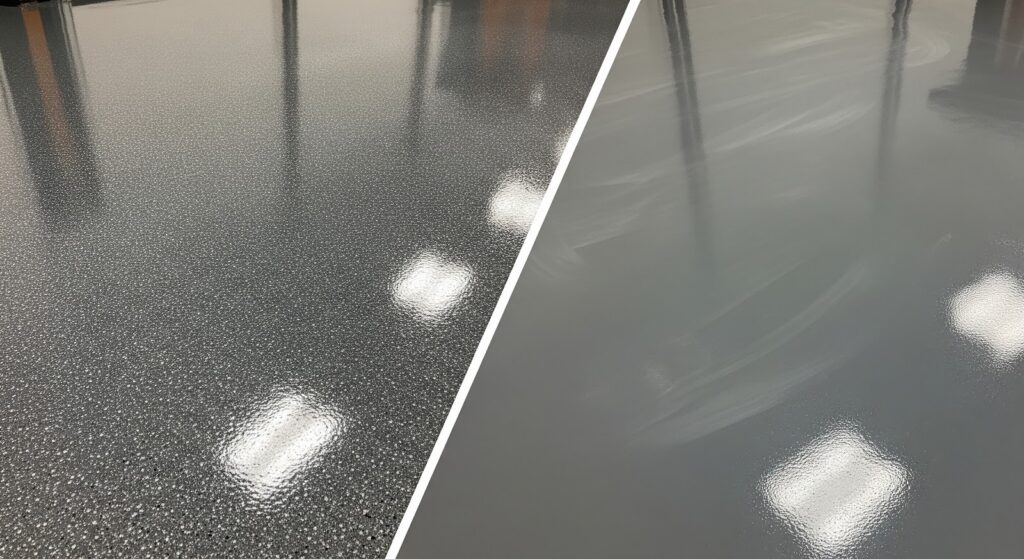
What is Epoxy Floor Coating?
Epoxy floor coating is a popular choice for both residential and commercial spaces due to its durability and aesthetic appeal. It is a thermosetting polymer that is applied as a liquid and then hardens to form a solid surface. This type of flooring is known for its strong adhesive properties, making it ideal for high-traffic areas. Epoxy coatings are often used in garages, warehouses, and industrial settings because they can withstand heavy loads and resist chemical spills.
- Durability: Epoxy is highly durable and can last for many years with proper maintenance.
- Chemical Resistance: It offers excellent resistance to chemicals, making it suitable for industrial environments.
- Aesthetic Options: Available in various colors and finishes, epoxy can enhance the visual appeal of any space.
What is Polyaspartic Floor Coating?
Polyaspartic floor coating is a type of polyurea that offers several advantages over traditional epoxy systems. It is known for its rapid curing time and superior UV stability, making it an excellent choice for outdoor applications. Polyaspartic coatings are highly flexible, which allows them to withstand temperature fluctuations without cracking. This makes them ideal for environments that experience extreme weather conditions.
- Fast Curing: Polyaspartic coatings cure quickly, reducing downtime during installation.
- UV Stability: They resist yellowing and fading when exposed to sunlight.
- Flexibility: The coating can expand and contract with temperature changes, preventing cracks.
Key Differences in Chemistry and Performance
The primary difference between polyaspartic and epoxy coatings lies in their chemical composition and performance characteristics. While epoxy is a thermosetting polymer, polyaspartic is a type of polyurea. This difference in chemistry results in distinct performance attributes, such as curing time, UV resistance, and flexibility.
- Curing Time: Polyaspartic cures faster than epoxy, allowing for quicker project completion.
- UV Resistance: Polyaspartic offers better protection against UV rays, preventing discoloration.
- Flexibility: Polyaspartic is more flexible, making it suitable for environments with temperature fluctuations.
Installation and Cure Time Comparison
Epoxy Cure Time and Multi-Step Installation
Epoxy floor coatings require a multi-step installation process that includes surface preparation, primer application, and multiple layers of epoxy. This process can take several days to complete, as each layer needs time to cure before the next one is applied. The extended cure time can be a disadvantage in projects where time is of the essence.
- Multi-Step Process: Involves surface preparation, priming, and multiple layers.
- Extended Cure Time: Each layer requires time to cure, prolonging the installation process.
- Time-Consuming: The entire process can take several days to complete.
Rapid Polyaspartic Cure for Faster Turnaround
Polyaspartic coatings offer a significant advantage in terms of installation speed. They can be applied in a single day, thanks to their rapid curing properties. This makes them an ideal choice for projects that require a quick turnaround, such as commercial spaces that cannot afford extended downtime.
- Single-Day Installation: Polyaspartic can be applied and cured in one day.
- Minimal Downtime: Reduces the time a space is out of service.
- Efficient Process: Streamlined application process saves time and labor costs.
Application Conditions and Temperature Sensitivity
Both epoxy and polyaspartic coatings have specific application conditions that must be met for optimal performance. Epoxy is sensitive to temperature and humidity, which can affect its curing process. In contrast, polyaspartic coatings are more forgiving and can be applied in a wider range of temperatures.
- Temperature Sensitivity: Epoxy requires controlled conditions for proper curing.
- Wider Application Range: Polyaspartic can be applied in various temperatures.
- Humidity Considerations: Epoxy is more sensitive to humidity levels during application.
Durability, Strength, and Wear Resistance
Epoxy Strength and Abrasion Resistance
Epoxy floor coatings are renowned for their strength and abrasion resistance. They can withstand heavy foot traffic and the weight of heavy machinery, making them suitable for industrial and commercial environments. The hard surface of epoxy also resists scratches and scuffs, maintaining its appearance over time.
- High Strength: Supports heavy loads without damage.
- Abrasion Resistance: Resists scratches and scuffs from foot traffic and machinery.
- Long-Lasting: Maintains appearance and functionality over time.
Polyaspartic UV Stability and Chemical Tolerance
Polyaspartic coatings excel in UV stability and chemical tolerance. They do not yellow or fade when exposed to sunlight, making them ideal for outdoor applications. Additionally, polyaspartic coatings resist a wide range of chemicals, including oils, solvents, and acids, providing long-term protection in harsh environments.
- UV Stability: Resists yellowing and fading from sun exposure.
- Chemical Resistance: Tolerates oils, solvents, and acids.
- Outdoor Suitability: Ideal for environments with sun exposure.
Impact Resistance and Long-Term Surface Protection
Both epoxy and polyaspartic coatings offer excellent impact resistance, protecting the underlying surface from damage. However, polyaspartic’s flexibility gives it an edge in environments with temperature fluctuations, as it can absorb impacts without cracking.
- Impact Resistance: Protects surfaces from damage.
- Flexibility Advantage: Polyaspartic absorbs impacts without cracking.
- Long-Term Protection: Both coatings offer durable surface protection.
UV Resistance and Color Stability
Epoxy’s Vulnerability to Yellowing
One of the drawbacks of epoxy coatings is their vulnerability to yellowing when exposed to UV light. This can affect the appearance of the floor over time, especially in areas with significant sunlight exposure. While epoxy is durable, its color stability is a concern for outdoor applications.
- Yellowing Issue: Prone to discoloration from UV exposure.
- Aesthetic Impact: Affects the visual appeal of the floor.
- Indoor Preference: Better suited for indoor applications.
Polyaspartic UV Protection Advantages
Polyaspartic coatings offer superior UV protection, maintaining their color and appearance even in direct sunlight. This makes them an excellent choice for outdoor spaces, such as patios and driveways, where UV exposure is a concern.
- Superior UV Protection: Maintains color and appearance in sunlight.
- Outdoor Applications: Ideal for patios, driveways, and other outdoor spaces.
- Long-Lasting Aesthetics: Resists fading and discoloration.
When UV-Exposure Matters in Flooring Selection
When selecting a floor coating, consider the level of UV exposure the area will receive. For spaces with significant sunlight, polyaspartic is the better choice due to its UV stability. In contrast, epoxy is more suitable for indoor environments where UV exposure is minimal.
- Consider UV Exposure: Choose based on sunlight exposure.
- Polyaspartic for Outdoors: Best for areas with high UV exposure.
- Epoxy for Indoors: Suitable for spaces with minimal sunlight.
Slip Resistance, Texture, and Finish Options
Texture Additives and Safety Coatings
Both epoxy and polyaspartic coatings can be enhanced with texture additives to improve slip resistance. These additives create a textured surface that reduces the risk of slips and falls, making the flooring safer for both residential and commercial use.
- Texture Additives: Improve slip resistance and safety.
- Safety Coatings: Reduce the risk of slips and falls.
- Versatile Applications: Suitable for both residential and commercial spaces.
Gloss, Satin, and Matte Finish Capabilities
Epoxy and polyaspartic coatings offer a range of finish options, including gloss, satin, and matte. These finishes allow for customization based on aesthetic preferences and functional needs. Glossy finishes provide a sleek look, while matte finishes offer a more subdued appearance.
- Finish Options: Gloss, satin, and matte available.
- Customization: Choose based on aesthetic and functional needs.
- Visual Appeal: Enhance the look of any space.
Meeting Slip-Resistance Requirements in Commercial Spaces
In commercial spaces, meeting slip-resistance requirements is crucial for safety. Both epoxy and polyaspartic coatings can be customized with slip-resistant additives to meet these standards, ensuring a safe environment for employees and customers.
- Commercial Safety: Meet slip-resistance requirements.
- Customizable Additives: Enhance safety with slip-resistant options.
- Safe Environment: Protect employees and customers from slips and falls.
Maintenance and Long-Term Performance
Cleaning and Care for Epoxy Floors
Epoxy floors are relatively easy to maintain, requiring regular cleaning to keep them looking their best. Sweeping and mopping with a mild detergent are usually sufficient to remove dirt and grime. However, it’s important to avoid harsh chemicals that can damage the surface.
- Easy Maintenance: Regular sweeping and mopping.
- Avoid Harsh Chemicals: Use mild detergents for cleaning.
- Long-Lasting Appearance: Maintain the floor’s visual appeal.
Polyaspartic Maintenance Requirements
Polyaspartic floors also require minimal maintenance, with regular cleaning being sufficient to keep them in good condition. Their chemical resistance makes them easy to clean, as they can withstand a variety of cleaning agents without damage.
- Minimal Maintenance: Regular cleaning keeps floors in good condition.
- Chemical Resistance: Withstands various cleaning agents.
- Durable Surface: Maintains appearance with minimal effort.
Lifespan Expectations in Heavy-Use Facilities
Both epoxy and polyaspartic coatings offer long lifespans, even in heavy-use facilities. However, polyaspartic’s flexibility and UV stability give it an edge in environments with temperature fluctuations and sunlight exposure, potentially extending its lifespan.
- Long Lifespan: Both coatings are durable in heavy-use environments.
- Polyaspartic Advantage: Flexibility and UV stability extend lifespan.
- Durability: Suitable for high-traffic and industrial settings.
Best Use-Cases for Epoxy vs. Polyaspartic
When Epoxy is the Ideal Choice
Epoxy is the ideal choice for indoor environments where UV exposure is minimal and budget constraints are a concern. Its durability and chemical resistance make it suitable for industrial and commercial settings.
- Indoor Environments: Best for spaces with minimal UV exposure.
- Budget-Friendly: Suitable for projects with cost constraints.
- Industrial Use: Ideal for commercial and industrial settings.
When Polyaspartic Delivers Maximum Value
Polyaspartic delivers maximum value in environments with high UV exposure and temperature fluctuations. Its rapid curing time and superior UV stability make it ideal for outdoor applications and projects with tight deadlines.
- Outdoor Applications: Best for areas with high UV exposure.
- Rapid Installation: Ideal for projects with tight deadlines.
- Temperature Fluctuations: Suitable for environments with extreme weather.
Hybrid Epoxy-Base + Polyaspartic Topcoat Systems
A hybrid system combining an epoxy base with a polyaspartic topcoat offers the best of both worlds. This approach provides the durability of epoxy with the UV stability and rapid curing of polyaspartic, making it a versatile solution for various applications.
- Hybrid System: Combines epoxy base with polyaspartic topcoat.
- Versatile Solution: Offers durability and UV stability.
- Best of Both Worlds: Ideal for diverse applications.
Why Professionals Trust Duraamen Resin Flooring Systems
Advanced Resin Chemistry Built for Performance
Duraamen Resin Flooring Systems are trusted by professionals for their advanced resin chemistry, which is designed to deliver superior performance in a variety of environments. Their products are engineered to withstand the demands of commercial and industrial settings, providing long-lasting durability and protection.
- Superior Performance: Advanced resin chemistry for durability.
- Commercial and Industrial: Designed for demanding environments.
- Long-Lasting Protection: Provides durable surface protection.
Proven Success in Commercial and Industrial Projects
Duraamen has a proven track record of success in commercial and industrial projects, with a portfolio of satisfied clients across various industries. Their flooring systems are known for their reliability and performance, making them a top choice for professionals.
- Proven Track Record: Success in commercial and industrial projects.
- Reliable Performance: Trusted by professionals for quality.
- Satisfied Clients: Portfolio of successful installations.
Technical Support and Guidance for Installers & Specifiers
Duraamen offers comprehensive technical support and guidance for installers and specifiers, ensuring successful project outcomes. Their team of experts provides assistance with product selection, installation techniques, and troubleshooting, making them a valuable partner in any flooring project.
- Comprehensive Support: Technical guidance for successful installations.
- Expert Assistance: Help with product selection and techniques.
- Valuable Partner: Ensures successful project outcomes.
Final Thoughts
Choosing between polyaspartic and epoxy floor coatings depends on various factors, including the environment, budget, and specific project requirements. Both options offer unique advantages, and understanding their differences can help you make an informed decision. Whether you prioritize rapid installation, UV stability, or cost-effectiveness, there’s a flooring solution that meets your needs. For expert advice and high-quality products, consider partnering with Duraamen Resin Flooring Systems, a trusted name in the industry.